

Creating and Managing Workflows
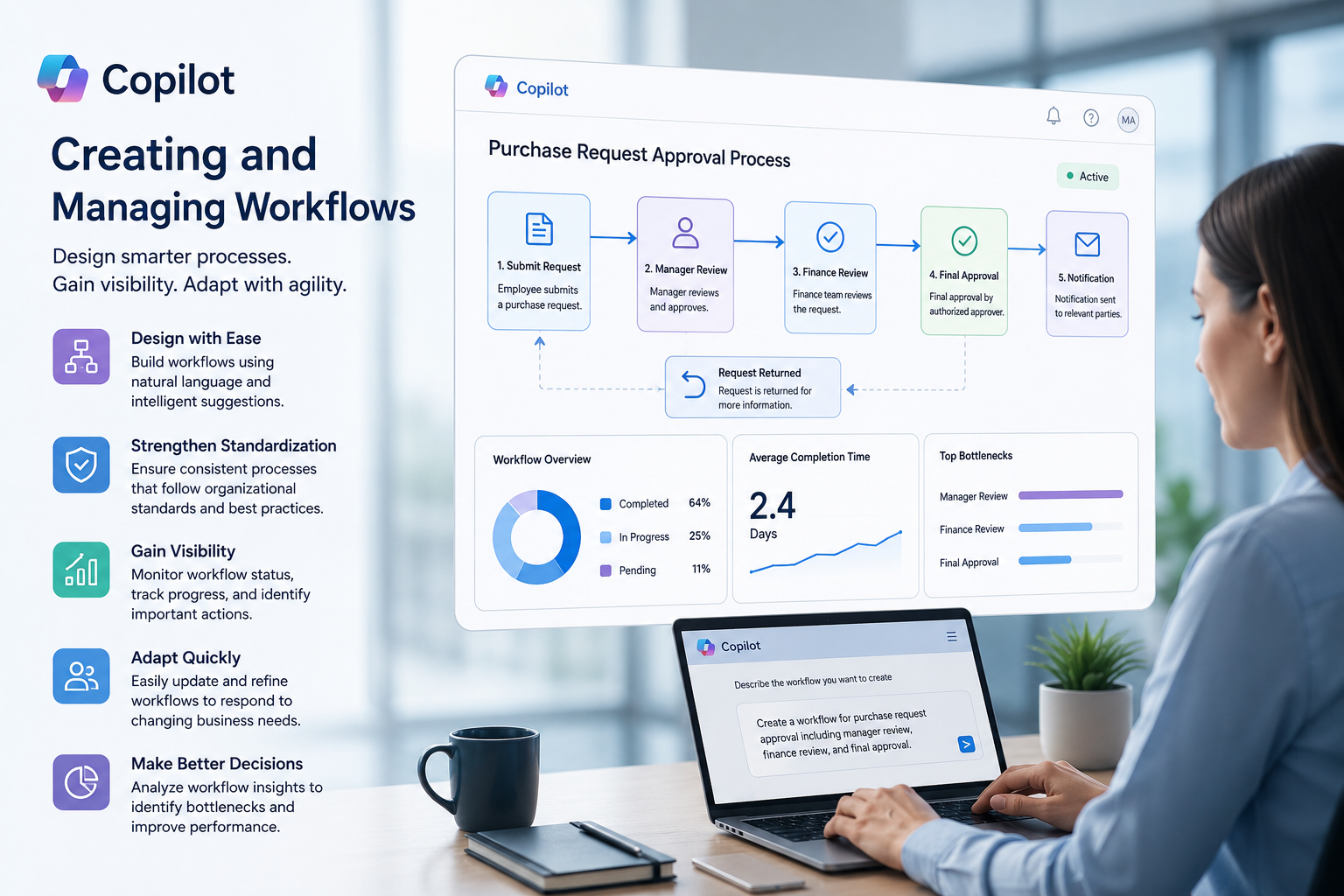
In today’s digital transformation journey, organizations are increasingly focused on streamlining operations, improving efficiency, and maintaining greater control over their business processes. Artificial intelligence-powered solutions are playing a critical role in achieving these goals. Microsoft Copilot helps organizations create and manage workflows more effectively, enabling teams to work smarter and deliver better outcomes.
Design Business Processes with Ease
Workflows provide a structured way to manage tasks and processes from initiation to completion. Traditionally, designing workflows often required technical expertise and extensive configuration efforts. With Copilot’s natural language capabilities, users can describe their requirements in simple terms and receive guidance for building effective workflow solutions.
By simplifying the design process, Copilot helps organizations accelerate implementation timelines while reducing the dependency on technical resources. This enables teams to focus on business objectives rather than complex system configurations.
Strengthen Process Standardization
Consistency is essential for maintaining operational excellence across an organization. When different teams follow different procedures for similar tasks, inefficiencies and communication challenges can arise. Copilot supports the creation of workflows that align with organizational standards and best practices, helping ensure consistency across departments.
As a result, organizations can improve process quality, reduce operational risks, and create more predictable business outcomes.
Gain Greater Visibility into Processes
Creating a workflow is only the first step; effective monitoring and management are equally important. Copilot provides valuable insights into workflow performance, allowing managers and stakeholders to gain better visibility into ongoing activities.
Organizations can track process status, identify pending actions, and monitor critical workflow stages more efficiently. This increased transparency enhances collaboration between teams and supports more informed decision-making.
Adapt Quickly to Changing Business Needs
Business requirements are constantly evolving. New approval stages, updated procedures, or additional stakeholders may need to be incorporated into existing workflows. Copilot helps organizations review and refine their workflows more efficiently, making it easier to respond to changing demands.
This flexibility allows businesses to remain agile and continuously align their processes with operational and strategic objectives.
Support Better Decision-Making
Workflow data contains valuable insights that can help organizations evaluate process effectiveness and identify opportunities for improvement. Copilot assists in analyzing workflow-related information, making it easier to detect bottlenecks, monitor performance trends, and uncover areas that require attention.
With access to meaningful insights, decision-makers can take proactive steps to optimize processes and drive continuous improvement initiatives across the organization.
Conclusion
Microsoft Copilot makes workflow creation and management more efficient, accessible, and scalable. Through its natural language capabilities, workflow design assistance, and process management support, organizations can streamline operations and improve overall productivity. For businesses seeking to enhance process governance and accelerate digital transformation, Copilot serves as a valuable partner in modern workflow management.
